
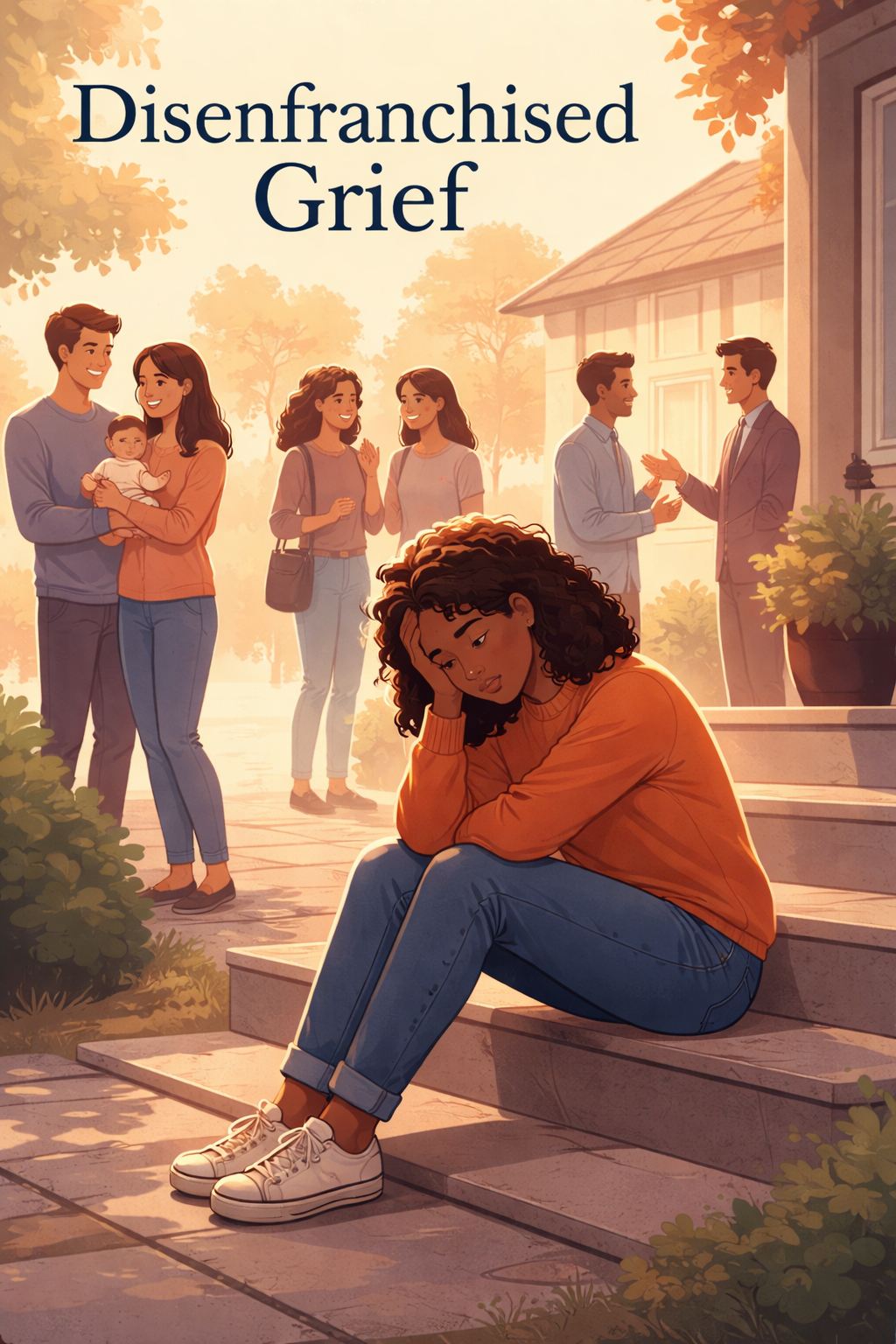
Disenfranchised grief describes the experience of mourning a loss that isn’t openly acknowledged or socially supported (Doka, 2008). The concept was introduced to show how certain losses fall outside society’s idea of “acceptable” grief (Doka, 1989, as cited in Doka, 2008). While many people recognise grief after the death of a spouse or child, other losses—like miscarriage, the death of a pet, or the end of an unacknowledged relationship—often receive little validation (Corr, 1999).
Societal stigma plays a major role here. When losses such as pregnancy loss or abortion aren’t recognised, people can feel even more isolated in their pain (Attig, 2004). These cultural norms create a hierarchy of grief, where some losses are seen as worthy of sympathy and others are quietly dismissed (Doka, 1999).
Because of this, many people suppress their emotions to fit expectations, which can limit support and affect mental health (Albuquerque et al., 2021). Recognising disenfranchised grief is an important step toward building more compassionate and inclusive support systems (Doka, 2008).
The Characteristics of Disenfranchised Grief
Disenfranchised grief is shaped by the absence of social validation, support, or recognised mourning rituals (Doka, 2008). One of its most painful characteristics is the sense of isolation that comes when others don’t acknowledge the loss (Albuquerque et al., 2021).
Another key feature is invalidation. Losses such as miscarriage or pet death are sometimes treated as insignificant, which can deepen loneliness and make emotional processing more difficult (Cordaro, 2012). People may also struggle to talk about their grief, especially when the loss is tied to stigma—such as suicide or addiction-related deaths—leading to unexpressed and unresolved emotions (Valentine et al., 2016).
These experiences can contribute to mental health challenges, including anxiety and depression, highlighting the need for sensitive, targeted support (Albuquerque et al., 2021).
Common Examples of Disenfranchised Grief
Disenfranchised grief shows up in many everyday situations, often in losses society overlooks or misunderstands (Doka, 2008).
Pet loss is a powerful example. Many people form deep emotional bonds with animals, yet their grief is often minimised or dismissed (Cordaro, 2012).
Miscarriage can bring intense emotional pain, but societal expectations to “move on quickly” often silence open mourning (Lang et al., 2011, as cited in Obst et al., 2020).
Suicide loss is complicated by stigma, which can evoke shame and discourage survivors from seeking support (Staley, 2016). Similarly, addiction‑related deaths may trigger societal blame, making it difficult for individuals to express their grief openly (Valentine et al., 2016).
These examples show how cultural attitudes can amplify distress and reinforce the importance of validating all forms of loss (Doka, 2008).
The Impact of Societal Expectations on Grief
When Culture Tells You How You “Should” Feel
Society often decides which losses “count.” Conventional deaths tend to receive sympathy and ritual, while others—such as pet loss—may not (Corr, 1999). This creates pressure to hide or downplay grief that doesn’t fit the norm (Doka, 2008).
Stigmatised losses, including those related to suicide or addiction, can intensify guilt and isolation, making healthy mourning more difficult (Valentine et al., 2016). These expectations can disrupt the grieving process and slow recovery (Attig, 2004).
Mental Health Consequences of Disenfranchised Grief
When grief isn’t validated, individuals may face increased risks of depression, anxiety, and other mental health challenges (Albuquerque et al., 2021). Isolation and shame can prolong healing, especially in contexts like pet loss where support is limited (Cordaro, 2012).
Research also links disenfranchised grief to heightened depressive symptoms in stigmatized losses (Singh & Singh, 2023). It can strain relationships, disrupt daily functioning, and reduce overall wellbeing. Professional support can help ease these impacts (Mortell, 2015).
Ways to Honour Your Grief When Others Don’t
Healing begins with acknowledging and validating your emotions. Personal and communal strategies can help create space for expression and connection (Fernández-Alcántara et al., 2021).
Journaling and creative expression offer gentle outlets for feelings that may be hard to share (Cameron, 2025).
Support groups provide understanding and community among people with similar experiences (Mortell, 2015).
Professional therapy offers tailored guidance, while self‑compassion practices help restore emotional balance (Singh & Singh, 2023).
Together, these approaches create meaningful pathways toward healing (Fernández-Alcántara et al., 2021).
Why Being Seen Matters
Validation is essential in supporting disenfranchised grief. It affirms the significance of overlooked losses and reinforces a sense of belonging (St Clair, 2013, as cited in Cameron, 2025). Empathic listening encourages open expression and counters the pressure to suppress emotions (Fernández-Alcántara et al., 2021).
Communal acts of acknowledgement—such as memorials or shared rituals—help normalise diverse grief experiences and support recovery (Cesur-Soysal & Arı, 2024). Through these practices, validation challenges societal norms and fosters healing (Doka, 2008).
Reaching Out Is a Strength, Not a Failure
Because disenfranchised grief can intensify isolation, professional support may be especially helpful (Mortell, 2015). Therapists offer safe, non‑judgmental spaces where individuals can explore their grief, receive validation, and develop coping strategies (Fernández-Basanta et al., 2023, as cited in Findlay & Robertson, 2023).
Both individual and group therapy can build resilience. Approaches such as cognitive‑behavioural techniques help reframe painful experiences and support emotional processing (Singh & Singh, 2023). Seeking help is a meaningful step toward navigating the complexities of disenfranchised grief (Mortell, 2015).
Creating a World Where Every Loss Matters
Disenfranchised grief is a widespread but often invisible experience. Losses such as miscarriage or pet death are frequently invalidated, leaving individuals to grieve alone (Cordaro, 2012). This lack of recognition can heighten isolation and hinder healing (Albuquerque et al., 2021).
Raising awareness and fostering empathy are essential. When we create safe spaces for all forms of grief, we challenge harmful norms and help build a more compassionate world (Fernández-Alcántara et al., 2021; Doka, 2008).
FAQ: Real Stories and Insights on Disenfranchised Grief
This FAQ section complements the main article on disenfranchised grief by addressing common questions through emotional, anonymized personal stories drawn from online communities and expert narratives. These stories provide validation, showing you’re not alone in feeling your grief is minimized or unrecognized. Disenfranchised grief occurs when a loss isn’t socially acknowledged, leading to isolation. If these resonate, consider seeking professional support. For related topics, see the upcoming article on ambiguous grief, which explores losses with uncertainty or lack of closure.
1. What does disenfranchised grief feel like in everyday life?
Disenfranchised grief often feels like “silent suffering” where your emotions are invalidated by others or society.
Story for Validation: One person shared losing their same-sex partner of many years suddenly. As an older gay man, they felt their grief was “disenfranchised” due to societal stigma around their relationship. They experienced profound loneliness, using AI chatbots for emotional support while struggling with depression and unresolved trauma. Over time, focusing on self-care and storytelling helped them process the loss, reminding them that grief doesn’t need external permission.
2. Is it normal to grieve a friend as deeply as family?
Yes, friendships can evoke intense grief, but it’s often dismissed as “not close enough.”
Story for Validation: A reader described losing a friend of 11 years to breast cancer. They felt “broken and invisible,” as others minimized the bond, saying things like “You weren’t family.” This led to suppressed emotions and guilt, but recognizing it as disenfranchised grief allowed them to honor the friendship privately through memories and rituals.
3. Why does grief from childhood losses linger unspoken?
Childhood losses can be disenfranchised if adults shield children from mourning, leading to long-term unresolved pain.
Story for Validation: Someone recounted their father dying in a car accident at age 9. They weren’t allowed to attend the funeral or see ashes, making the grief feel invalid. As an adult, this manifested as ongoing isolation and difficulty processing emotions, but therapy helped validate the childhood trauma.
4. Can I grieve someone I had a complicated relationship with?
Absolutely—mixed feelings like relief and sorrow are common, but stigma can make it feel illegitimate.
Story for Validation: An author shared losing multiple friends in their youth, feeling “angry, guilty, and ashamed” for not being a better friend. Others’ grief seemed more “legitimate,” amplifying their shame. Over years, they learned grief isn’t earned and sought support to let sorrow in without judgment.
5. What about grieving non-death losses, like a therapist or mentor?
Non-death losses, such as ending a significant professional relationship, can be deeply felt but rarely acknowledged.
Story for Validation: A person described saying goodbye to someone integral to their wellness for 10 years (possibly a therapist). The grief felt “strange” and unsupported, as it didn’t fit traditional loss narratives. They emphasized that the depth of grief ties to relationship closeness, encouraging private mourning to process it.
6. How do I cope when my grief feels “less valid” than others’?
Compare grief only to your own experience; all feelings are valid, regardless of perceived hierarchy.
Story for Validation: A grief coach shared feeling their sorrow over a second spouse’s death was “less valid” than a first marriage loss. Projecting judgments onto others worsened the pain, but self-compassion and reframing thoughts helped affirm their emotions.
7. Are there common examples where grief is overlooked?
Yes, like pet loss, overdose, or suicide, where stigma silences mourners.
Story for Validation: One commenter lost their partner of 28 years, feeling “broken and torn apart.” Unable to express it fully due to societal dismissal, they joined communities sharing similar stories, finding solace in knowing others faced the same invalidation.
Yes, incorporating pet loss grief stories would significantly enhance the FAQ section of your disenfranchised grief article. Pet loss is one of the most common and poignant examples of disenfranchised grief, where the deep emotional bond with an animal is often dismissed by society as “not real” or “less significant” than human losses. This minimization can lead to isolation, guilt, and prolonged suffering, making personal stories a powerful tool for validation and empathy—key elements in grief coaching content. Adding these would align with user searches for emotional resonance, broaden the FAQ’s relatability, and provide practical insights for readers processing similar losses. It also sets up a smooth transition to your upcoming ambiguous grief article, as pet loss can involve ambiguity (e.g., sudden disappearances or unexplained illnesses).
To integrate them seamlessly, you could add 1-2 new questions to the existing FAQ or expand an existing one (e.g., Question 7 on overlooked examples). Below, I’ll suggest sample additions based on real, anonymized stories from credible sources. These emphasize the raw emotions, societal invalidation, and coping paths, while tying back to grief coaching principles like self-compassion and seeking support.
Suggested FAQ Additions
8. Is grieving a pet considered disenfranchised grief?
Yes, pet loss is a prime example, as society often views animals as “just pets,” leading to dismissed emotions and lack of support like bereavement leave or rituals.
Story for Validation: One person shared losing their elderly dog after years of companionship, savoring every visit home while fearing it might be the last. When the dog passed peacefully after a final meal of poached salmon, they felt relief from the pet’s pain but profound sorrow over never giving another belly rub. Friends’ comments like “When are you getting another one?” deepened the hurt, making the grief feel invisible. Over time, sharing stories in online communities helped them honor the bond without judgment, reminding them that pet grief is as valid as any other.
9. How can I cope with the guilt and shame of pet loss grief?
Guilt often arises from societal stigma or self-doubt (e.g., “It was just an animal”), but recognizing it as disenfranchised grief allows for self-compassion and healing rituals.
Story for Validation: A family recounted getting their first puppy shortly after a new baby arrived, forming a lifelong bond. When the dog died from cancer during their college years, the hardest part was the pet’s brave demeanour—warm eyes and wagging tail—as they said goodbye at the vet. Years later, the grief lingered because others didn’t understand why it hit so hard. Therapy revealed it as disenfranchised loss, helping them process the trauma and create memorials, like sharing photos, to affirm the pet’s role as family.
Story for Validation: Another individual described their cat vanishing after a trip away, leading to anger, guilt, and despondency—the pet had been their “reason for getting up in the morning.” The lack of closure amplified the pain, with friends minimising it as “just a cat.” Embracing mindfulness practices, like journaling the pet’s quirky habits, shifted the grief from shame to gratitude, highlighting how pets connect us to deeper emotional needs.
These FAQs draw from real experiences to foster empathy and understanding. If your story aligns, remember: Validation starts within. For more on navigating uncertainty in loss, stay tuned for the ambiguous grief article.
References
Albuquerque, S., Teixeira, A. M., & Rocha, J. C. (2021). COVID-19 and disenfranchised grief. *Frontiers in Psychiatry, 12*, Article 638874. https://doi.org/10.3389/fpsyt.2021.638874
Attig, T. (2004). Disenfranchised grief revisited: Discounting hope and love. *OMEGA – Journal of Death and Dying, 49*(3), 197-215.https://doi.org/10.2190/P4TT-J3BF-KFDR-5JB1
Cameron, D. (2025). Disenfranchised grief and meaning reconstruction in the wake of animal loss. *OMEGA – Journal of Death and Dying*. Advance online publication. https://doi.org/10.1177/00302228251410992
Cesur-Soysal, G., & Arı, E. (2024). How we disenfranchise grief for self and other: An empirical study. *OMEGA – Journal of Death and Dying, 89*(2), 530-549. https://doi.org/10.1177/00302228221075203
Cordaro, M. (2012). Pet loss and disenfranchised grief: Implications for mental health counseling practice. *Journal of Mental Health Counseling, 34*(4), 283-294. https://doi.org/10.17744/mehc.34.4.41q0248450t98072
Corr, C. A. (1999). Enhancing the concept of disenfranchised grief. *OMEGA – Journal of Death and Dying, 38*(1), 1-20. https://doi.org/10.2190/LD26-42A6-1EAV-3MDN
Doka, K. J. (1999). Disenfranchised grief. *Bereavement Care, 18*(3), 37-39. https://doi.org/10.1080/02682629908657467
Doka, K. J. (2008). Disenfranchised grief in historical and cultural perspective. In M. S. Stroebe, R. O. Hansson, H. Schut, & W. Stroebe (Eds.), *Handbook of bereavement research and practice: Advances in theory and intervention* (pp. 223-240). American Psychological Association. https://doi.org/10.1037/14498-011
Fernández-Alcántara, M., Kokou-Kpolou, C. K., Cruz-Quintana, F., & Pérez-Marfil, M. N. (2021). Editorial: New perspectives in bereavement and loss: Complicated and disenfranchised grief along the life cycle. *Frontiers in Psychology, 12*, Article 691464. https://doi.org/10.3389/fpsyg.2021.691464
Mortell, S. (2015). Assisting clients with disenfranchised grief: The role of a mental health nurse. Journal of Psychosocial Nursing and Mental Health Services, 53*(4), 52-57. https://doi.org/10.3928/02793695-20150319-05
Obst, K. L., Due, C., Oxlad, M., & Middleton, P. (2020). Men’s grief following pregnancy loss and neonatal loss: A systematic review and emerging theoretical model. *BMC Pregnancy and Childbirth, 20*(1), Article 11. https://doi.org/10.1186/s12884-019-2677-9
Singh, S., & Singh, P. (2023). The trajectory of depression through disenfranchised grief in young widows in times of COVID-19: A case report from rural India. *Behavioral Sciences, 13*(8), 653. https://doi.org/10.3390/bs13080653
Staley, A. (2016). The phenomenon of disenfranchised grief experienced by those bereaved by suicide: A contemporary pastoral response. Journal of Contemporary Ministry, 2*, 32-46.
Valentine, C., Bauld, L., & Walter, T. (2016). Bereavement following substance misuse: A disenfranchised grief. *OMEGA – Journal of Death and Dying, 72*(4), 283-301. https://doi.org/10.1177/0030222815625174
Personal stories
Summary of References
The references primarily consist of online sources sharing anonymised personal narratives on disenfranchised grief, including general experiences (e.g., loss of ex-spouses, friends, or partners) and pet-specific losses. They draw from community forums like Reddit (e.g., r/GriefSupport, r/Petloss, r/widowers) for raw, user-shared stories, and blogs/articles from sites like What’s Your Grief, Open to Hope, and Grief in Common for reflective insights. Key dates range from 2015 to 2024, emphasising themes of isolation, validation, and coping. These sources are acknowledged for humanising disenfranchised grief, providing emotional resonance, and supporting grief coaching by illustrating real-world applications. Thank you to all contributors for sharing their vulnerable experiences to help others feel seen.