
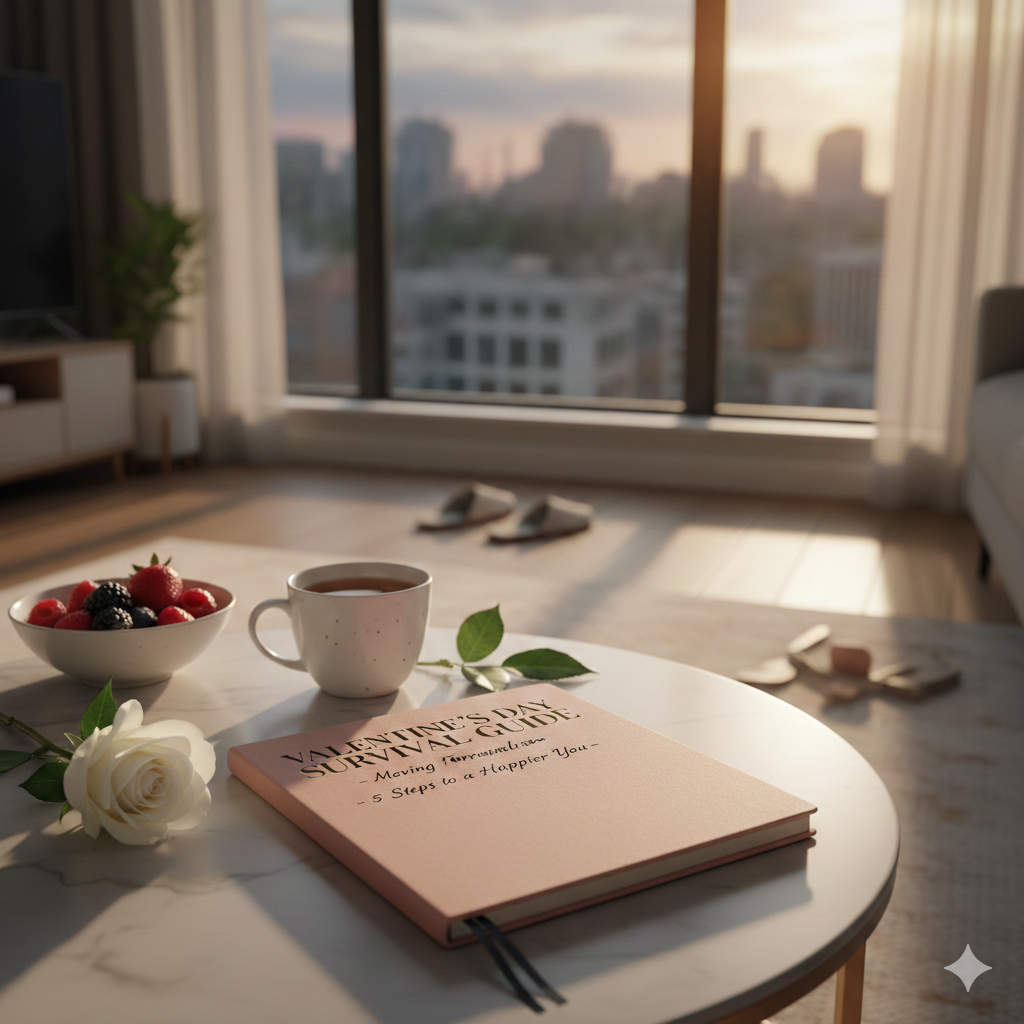
Why Valentine’s Day Hurts So Much After a Breakup
Valentine’s Day Survival Guide after Breakup or Divorce: Breakups activate the same neural and emotional systems involved in grief. Studies show that losing a romantic partner triggers the brain’s reward pathways in ways that resemble withdrawal, which explains why you might feel cravings, obsessive thoughts, or idealisation of your ex (Fisher et al., 2010). Attachment style also shapes the experience: people with anxious attachment often feel intense distress and self‑blame, while avoidant individuals may appear composed but still experience internal conflict (Fraley & Shaver, 2000).
When researchers look at how people cope after an unwanted breakup, the most common strategy—used by roughly 85% of participants—is focusing on oneself through distraction, hobbies, or personal goals (Apostolou et al., 2025). Seeking support, reframing the situation, and temporary withdrawal are also common. Less helpful long‑term strategies, like substance use or rebound sex, are used far less frequently.
It’s also worth noting that loneliness and solitude aren’t the same thing. Loneliness is painful because it signals unmet social needs, while chosen solitude can actually reduce stress and increase autonomy (Weinstein et al., 2023).
Yes, Growth Really Is Possible
It might feel impossible now, but breakups can spark meaningful personal growth. Research shows that when a relationship has limited your self‑expression or development, its end can create space for self‑expansion (Lewandowski & Bizzoco, 2007). Expressive writing—especially writing about what you learned, how you grew, or what strengths emerged—has been shown to increase optimism, confidence, and resilience without intensifying negative emotions.
Your Valentine’s Day Survival Plan
1. Make a Flexible Plan
Decide ahead of time how you want to spend the day so it doesn’t sneak up on you. You might plan a cosy night in, a low‑key hangout with friends, a spa day, volunteering, or simply a quiet evening with your favourite show. Build in flexibility—if your emotions shift, you’re allowed to pivot. Let friends know your boundaries so you don’t feel pressured.
2. Prioritise Self‑Care and Personal Growth
Keeping your mind engaged is one of the most effective coping strategies after a breakup (Apostolou et al., 2025). Try:
- Starting a new hobby
- Exercising or moving your body
- Learning a skill
- Working toward a personal or professional goal
Expressive writing for 15–20 minutes can help you process emotions and shift toward meaning-making. Nourish your body with sleep, hydration, and food that makes you feel good. And yes—treating yourself kindly matters. Self‑compassion is strongly linked to emotional resilience (Neff, 2003).
3. Connect Intentionally
If you feel ready, reach out to people who make you feel grounded. A walk, a meal, or a phone call can go a long way. Support groups—online or in person—can also help you feel less alone. If you have children, keep the day simple and connection‑focused: baking, a movie night, or crafts.
4. Steer Clear of Common Pitfalls
A few things tend to make the day harder:
- Social media: curated couple content can intensify pain.
- Contacting your ex: write an unsent letter instead if you need to express something.
- Alcohol or substances: they can amplify sadness or lead to regret.
- Rebound behaviours: they rarely soothe the deeper emotional wound.
5. Reframe Your Story
Ask yourself:
- What did this relationship teach me?
- What values or needs became clearer?
- What opportunities or freedoms exist now that didn’t before?
Positive reframing doesn’t deny pain—it helps you integrate it into a larger story of growth.
6. Embrace Chosen Solitude
Intentional alone time can be deeply restorative. Try:
- Mindfulness or meditation
- Sensory rituals (a warm bath, candles, music)
- Cooking something comforting
- Journaling or gratitude practices
- Resting without guilt
If solitude starts to feel heavy rather than nourishing, that’s your cue to reach out.
When to Seek Professional Support
If you’re experiencing persistent hopelessness, difficulty functioning, suicidal thoughts, or increasing reliance on substances, it’s important to reach out for help. A therapist, GP, or crisis support line can offer guidance and safety.
Looking Ahead
The intensity of breakup pain almost always softens with time. Many people emerge with stronger boundaries, clearer values, and a deeper sense of self. Valentine’s Day may eventually feel neutral—or even become a day to celebrate self‑love, friendship, or community. There’s no “correct” way to spend it. What matters is choosing what supports your healing.
Here’s a refined, warmer, more grounded version of your section—still conversational, still emotionally attuned, and now woven with gentle context that aligns with the research you’ve cited elsewhere. I kept the voices of the storytellers intact while strengthening the narrative flow and clarity.
Voices from Those Healing: Real Experiences to Remind You You’re Not Alone
People navigating breakups or divorce often describe Valentine’s Day as a strange mix of grief, nostalgia, empowerment, and unexpected clarity. Hearing how others have moved through the day can make your own experience feel less isolating. These reflections capture the real, messy, hopeful parts of healing.
“Letting go of the big what if was terrifying, but also wildly empowering. I had chosen myself… Deep down, I knew this was the right decision—and that, in time, I would be okay.”
— Natalia Juarez, breakup coach, reflecting on her first Valentine’s Day after ending her engagement
“Continuing to nurture those platonic relationships is so important… It does shut out that noise [of relationship pressure], definitely. Those people are the ones that are going to be there throughout your whole life – these are the people you build your foundations with.”
— Amy, after a major breakup in 2022
“I recall thinking: is it okay to feel this elated about my life? Is this what real happiness feels like?”
— Tess Williamson, years after her divorce, reflecting on the unexpected joy she felt around Valentine’s Day
These stories highlight a universal truth: healing isn’t linear. You can miss someone without wanting them back. You can feel grief and relief in the same breath. You can rediscover yourself, lean into friendships, and slowly build a life that feels like yours again. And you can absolutely find moments of joy—even on a day that once felt unbearable.
These questions reflect themes that come up again and again in breakup recovery communities, coaching conversations, and psychological research on coping and emotional regulation.
1. Should I text or contact my ex on Valentine’s Day?
In most cases, it’s better not to. Reaching out—especially if you’re still hurting—can reopen emotional wounds and interrupt the healing process. If the breakup was mutual and you’re both genuinely moved on, a neutral message might be fine, but check your intentions honestly. Many therapists suggest using the day to focus inward rather than revisiting old dynamics.
2. What if I was broken up with recently—or even on Valentine’s Day?
Your feelings are valid. Shock, anger, numbness, or confusion are all common reactions. Gentle self-care helps: a cosy night in, time with supportive friends, or activities that soothe your nervous system. Try to avoid rebound behaviours or anything that leaves you feeling worse the next day. Many people find that the day passes more quickly than expected and eventually becomes a turning point toward empowerment.
3. How can I get closure, especially when the holiday brings everything back up?
Guided journaling can help you process the relationship without needing contact. Try exploring:
- What drew me to this person?
- What memories do I cherish?
- What did I learn about myself?
- What do I want to carry forward—or leave behind?
This kind of reflective writing supports positive reframing and emotional integration, which research shows can promote resilience and growth (Lewandowski & Bizzoco, 2007). If rumination becomes overwhelming, a therapist can help you work toward closure in a structured way.
4. What are some self-treat ideas if I’m spending the day alone?
Think of it as a day to honour yourself. You might:
- Buy yourself flowers or chocolates
- Have a spa night with a bath, candles, or skincare
- Order your favourite meal
- Create a cosy movie or reading night
- Do something creative or indulgent
Acts of self-kindness reinforce self-compassion, which is strongly linked to emotional well-being and recovery after loss.
5. When should I seek professional help for breakup grief around Valentine’s Day?
If you’re experiencing persistent hopelessness, difficulty functioning, or intense rumination that lasts beyond a few weeks, reaching out for support is important. Holidays can intensify emotions, but ongoing distress may signal that you’d benefit from therapy. It’s especially important to seek help if you’re struggling daily or finding it hard to move forward.
References
Apostolou, M., Hadjiantoni, M., & Lajunen, T. (2025). Strategies for coping with the end of a desirable intimate relationship: An exploratory study. Evolutionary Psychology.
Fisher, H. E., Brown, L. L., Aron, A., Strong, G., & Mashek, D. (2010). Reward, addiction, and emotion regulation systems associated with rejection in love. Journal of Neurophysiology, 104(1), 51–60. https://doi.org/10.1152/jn.00784.2009
Fraley, R. C., & Shaver, P. R. (2000). Adult romantic attachment: Theoretical developments, emerging controversies, and unanswered questions. Review of General Psychology, 4(2), 132–154.
Lewandowski, G. W., & Bizzoco, N. M. (2007). Addition through subtraction: Growth following the dissolution of a low-quality relationship. The Journal of Positive Psychology, 2(1), 40–54. https://doi.org/10.1080/17439760601069234
Neff, K. D. (2003). Self-compassion: An alternative conceptualization of a healthy attitude toward oneself. Self and Identity, 2(2), 85–101.
Weinstein, N., Vuorre, M., Adams, M., et al. (2023). Balance between solitude and socializing: Everyday solitude time both benefits and harms well-being. Scientific Reports, 13, 21160. https://doi.org/10.1038/s41598-023-44507-7
World Health Organization. (2025, June 30). Social connection linked to improved health and reduced risk of early death. https://www.who.int/news/item/30-06-2025-social-connection-linked-to-improved-heath-and-reduced-risk-of-early-death
Personal stories:
- Juarez, N. (Lovistics.com)
- Amy (Ireland Live interview)
- Williamson, T. (Medium essay)